Flan

3 tbsp Sugar
1 tbsp light corn syrup
1 tbsp Water
1.5-2 tbsp Hot Water

2 Eggs
250ml Milk
5 tbsp Sugar

130ml Pudding Molds (4.4 fl oz)
Unsalted Butter

Put syrup in bottom. Then custard on top. Cover with foil.

Bring water in pan to just under boil. Put covered cups into pan. Water should rise halfway up cut sides. Cover with lid and keep under a boil for 18-20 minutes.

Smoked Chuck

  • 2-4 pound chuck roast
  • 1/4 c. rum
  • 3/4 c. soy sauce
  • 1 c. beef stock
  • 2 T. Worstershire sauce
  • 1/2 diced onion
  • 2 gloves garlic

Poke the meat a bit. I think doing so might help the marinade get in. Then stick the meat in a plastic bag, dump the other ingredients in, and close the bag, trying to get as much air out as possible. Let sit for a few hours (I did 6 this particular time).

Remove the meat from bag, and save a few table spoons of the marinade.

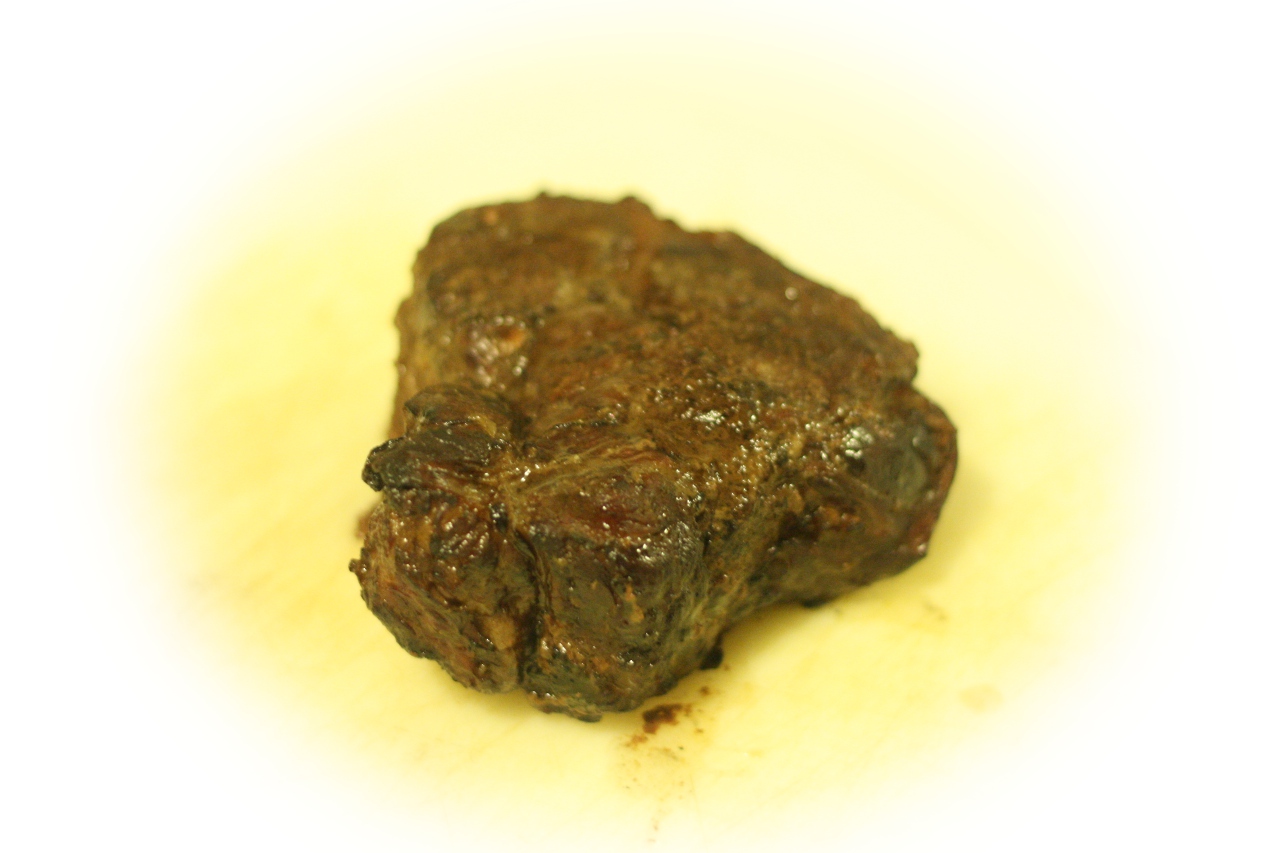
Smoke the meat until the internal temp is 140 degrees (F). I did this with wood chips soaked in water, place in a disposable pan on the left burner of a gas grill with the meat placed on the right side (burner off). This took about 90 minutes.

At this point, you want to tightly wrap the meat in aluminum foil along with a bit more marinade. This will make sure the end result is moist.

Return the meat to a low heat (grill or oven) and leave until tender (probably well more than 2 hours).

Remove and let rest 15 minutes, then cut and serve.

A new thermometer

I don’t know where I got the idea from, but I’ve long thought that knowing how hot a pan is would be tremendously handy. And of course, the obvious way to measure surface temperature is with an infrared thermometer. So, I went and got a Ryobi IR001 Non-contact Infrared Thermometer (with Laser) from Amazon (see http://amzn.com/B001O7H61Y).

So far, it is particularly handy for seeing how close to boiling water is (212°F) and when a pan is hot enough to saute (350-400°F).

My only complaint is that it tops out at about 600 °F, and sometimes higher would be nice.

Also, I really wish that I would remember to keep notes on temperatures for frying eggs, pancakes, and what exactly is high, medium, and medium high?

Crockpot Jambalaya

Sorry, no picture this time since I was taking it to a church function.  I think that the seasoning could use some tweaking, maybe a bit less cayenne.  Also, the cooking time for me should have been closer to the smaller number listed, rather than the larger number.  The one time I did make it, I cooked it for 4 hours on high.  Next time I’d prefer to try 6-7 hours on low.

  • 1 pound skinless/boneless chicken breast in 1 in. pieces
  • 1 pound andouille sausage, 1 in. pieces
  • 28 oz. can diced tomatoes with juice
  • 1 large onion, chopped
  • 1 large green bell pepper, chopped
  • 1 cup chopped celery
  • 1 cup chicken broth
  • 2 tsp. dried oregano
  • 2 tsp. dried parsley
  • 2 tsp. Cajun seasoning)
  • 1 tsp. Cayenne pepper
  • 1/2 tsp. dried thyme
  • 1 pound raw shrimp, peeled/deveined (frozen in a bag is fine)
  • 16 oz. frozen okra
  • 2 cups rice

DIRECTIONS

  1. In a slow cooker, mix everything but okra and shrimp and cover.
  2. Cook 7 to 8 hours on Low, or 3 to 4 hours on High.
  3. Stir in okra during last hour of cook time. Stir in the shrimp during the last 30 minutes of cook time.
  4. Serve with crusty baguette bread.

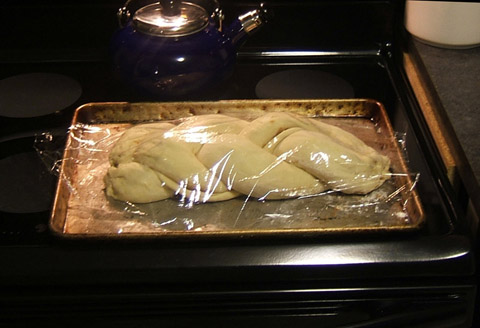
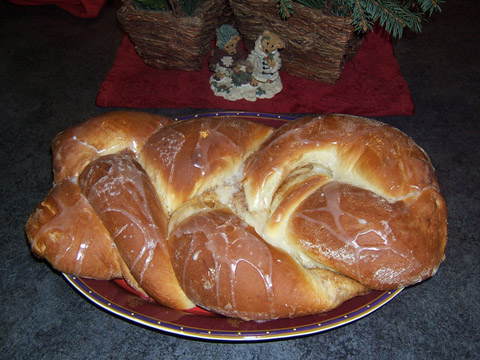
Braided Cinnamon Bread

Preheat oven to 400 degrees.

Follow a basic milk bread recipe (flour, sugar, salt, yeast, water, milk, shortening) through the first kneading and rising stage.

Split dough into three equal portions

Roll out each portion, into a roughly 4:3 shape. Cover with a mixture of sugar, butter, and cinnamon, then roll into a tube.

Fan out three tubes, pinch ends together and braid.

Allow to rise again until double in size.

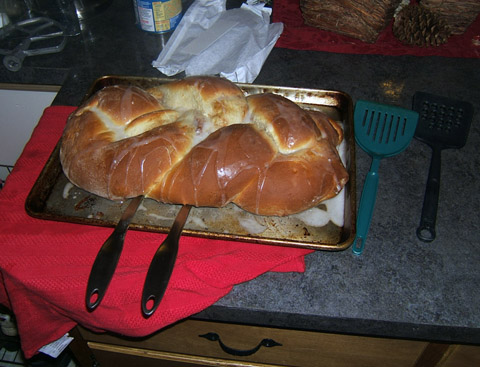
Bake until lightly golden.

Top with milk/powdered sugar glaze (roughly 1tbsp milk to 1/2 cup powdered suger, 2-4 multiples of that formula will be needed).

Serve. It took 4 hands and a lot of care to move that monster to the platter seen in the first picture.

Vanilla Extract

I made vanilla extract.  Since I just followed the directions, here is the link.  I can’t try it for 4 weeks, and it won’t really be done for six months.  I hope it doesn’t come out weak.  I dropped a bit of the seeds on the floor and decided to trash what was on the floor rather than risk tainting the rest.

I got the beans from my brother in law.  I used Smirnoff as pictured.

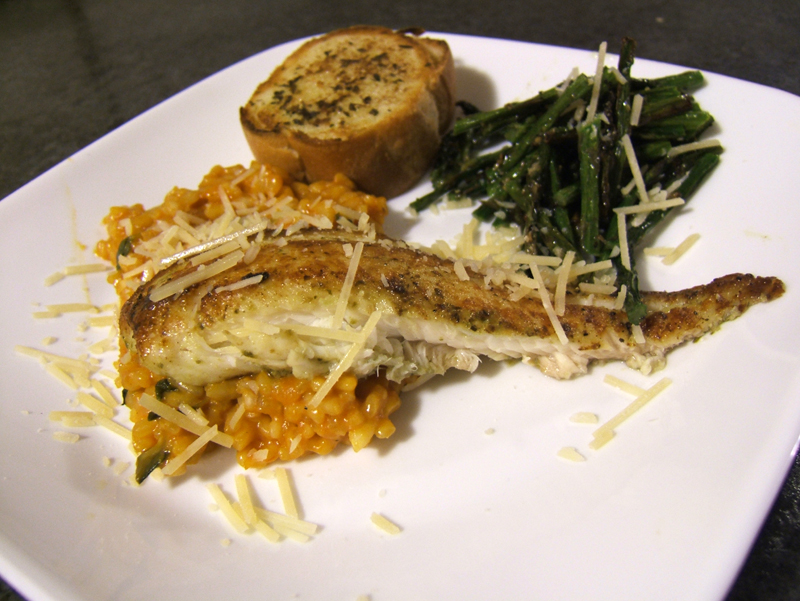
Pesto Tilapia on Tomato Risotto with Roast Asparagus

I made enough for 4 this time because I wanted left overs to pack for lunch.

The tilapia was 1/2 pound rubbed with pesto from a squeeze tube, then fried. I didn’t love the flavor, and if I were to try fish like this again, I’d pick a different white fish, possibly haddock. Otherwise I might go with pesto chicken.

The risotto was very well like though. The main difference (from last time) was what I used for a liquid. From memory:

  • 1 cup tomato sauce (1 can)
  • 1/2cup wine.
  • 2.5 cups chicken stock.

Also, before I put the rice in butter, I first put 1/2 onion and 2 cloves garlic, both  minced, in the pan and softened them in butter.  This would be a fairly typical thing to do, but when I posted about risotto last time, I had been out of onions and thus didn’t include it.

After coating the rice with butter, continue preparing normally.  That means add a little liquid, then stir till it is absorbed, and repeat.  Keep doing this until it has a texture you like, probably about 20 minutes, and you probably won’t use all the broth you made.  Near the end add 2 Tbps of tomato paste.  Then add parmesan to taste.

Poached Egg on Risotto with Spinach and Bacon

The goal was to have something more than frozen pizza, or reheated spaghetti and meatballs, using only stuff on hand.  Using up the spinache before it went bad was a nice benefit.  I bought a lot of vegatables at the beginning of the week and haven’t been using them as quickly as planned.  Now, I still need to use up the beans (uncooked, from the pack bought for the maple salmon) in the near future.

Once again, I cooked after dark.  This time it was indoors, but natural sun light would have helped the pictures I think.  I ended up not using any but one final.
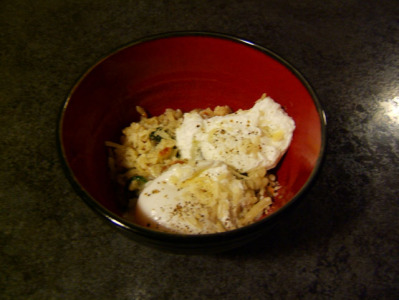
Ingredients:

  • 3/4 cups chicken broth or stock
  • 1/4 cup dry white wine
  • 1 cup parmesan broth
  • 1 tablespoons butter
  • 1/2 cups Arborio Rice
  • wilted spinach
  • crumbled bacon
  • 4 eggs
  • water
  • vinegar
  • 2 tablespoons grated parmesan

Note on order:

Both poached eggs and risotto are best served immediately.  I feel
that is slightly more important for the eggs, so I start the risotto
first, then do the eggs about 10 minutes into the stirring in the
liquid stage of the risotto.  Finished eggs are store in a covered
bowl in the microwave to preserve their warth.  Since the risotto
should finish first, I leave it covered off the burner to keep it warn.

The parmesan broth:

Boil 1 cup water.  Add parmesan rind and a few pepper corns, simmer
for a few minutes.  Strain.

To wilt the spinach, I use a minimal amount of olive oil in a pan,
then add the spinach and toss some salt and pepper on top.

Risotto:

Contrary to popular reports, you don’t have to stir constantly.  You
do need to stir alot though, and you also need to watch constantly.

Mix liquids together and warm them.

In a heavy sauce pan, melt butter.  Add the rice, add stir with spoon
until grains are coated.  At this point you will start adding liquid
to the rice a few tablespoons at a time.  After each addition, keep
stirring the rice until the liquid is completely absorbed.  Expect
this process to take about 18 minutes.  Stop when rice is al-dente.  I
like the risotto to be soft enough that they don’t resist biting, but
not so soft that you can’t feel the grains in your mouth.

Salt and pepper to taste.

When the risotto is complete, stir in the spinach and bacon.

Poached Egg (If you know how, skip this):

First, you need a pan that will allow you to have 5 inches of water
while staying at least 1.5 inches from the top of the pan.  Fill the
pan so that you have 5 inches of water.  Add a tablespoon of white
vinegar.  Bring the water to a simmer (200 degrees).

Spin the water with a ladle handle.  Drop an egg in the center.  Leave
it for 3-4 minutes.  It will look messy until you remove the egg.  You
might consider watching a few tutorial videos on youtube.  That’s what
I had to do.  No amount of reading explanations made me realize that I
just needed to wait long enough before removing the egg, then trust
that it would look OK when served.

Also, be prepared to waste a few eggs practicing.  They aren’t that
expensive.

Serve:

Put risotto in individual bowls, then place eggs on top and sprinkle
with a dash of salt, parmesan, and ground pepper.
Making Soy Maple Salmon with Sauted Green Beans

I had planned to make teriyaki shark tonight because shark was advertised on sale.  I bought the beans yesterday.  When I tried to buy the shark today, I found that they were sold out for the day (but might have more tomorrow, even though technically this was yesterday based on what the clock reads), so I bought Salmon instead since I didn’t want to give up plans of having fish.

I then proceeded to cook and attempt to take pictures after dark.  And this was actually a somewhat early time.  I had to pick my car up from the shop, so I used that as an excuse to leave work early.

For the recipe, look here.

Final dish, plated on our picnic table.

Green beans, blanched and coated in oil and soy sauce.

Salmon, salted and peppered.

Green beans on the side burner of my grill.  Deb was trying to capture dramatic flames from the oil spritzing over the side as I shook the pan.

Salmon on the upper rack of the grill.

Soy-maple Glazed Salmon, with Sauted Green Beans, Recipe

Fish:

  • 2 boneless salmon fillet, serving size (could be a good bit more)
  • Salt + pepper

Glaze:

  • 2 tablespoons maple syrup
  • 1 tablespoons soy sauce + extra for beans
  • 1 tablespoons melted butter
  • 1 tablespoons fresh lime juice
  • 1/2 teaspoon lime zest
  • chopped fresh chives
  • lemon wedges

Beans:

  • Green beans, enough to serve the number of people eating.
  • 1 tablespoon sesame oil
  • 1 tablespoon vegetable oil
  • 1 tablespoon soy sauce

Directions:

Remove the tips and stems.  Cut into 3 in. sections.  Blanch them (1 minute or less in boiling water).  This probably takes long enough that you might as well do it before preheating anything.

Preheat the grill for medium-high heat and lightly oil grate (I used the upper rack, but if you don’t have an upper rack, then lower the temperature).  Also preheat your bean pan (cast iron is great, heavy stainless steal is also good, a non-stick pan is bad because they break down at high heat) on high.  This works nicely if you have a cook side burner next to your grill.

Whisk together the maple syrup, soy sauce, butter, lime juice, and lime zest.

Season the salmon fillet with salt and pepper, and put a spoon full of sauce over it to marinate for a few minutes.

Dry beans, then oil lightly with equal parts sesame oil and vegetable oil.  Drizzle with soy sauce.

Place skin-side down on either the upper shelf, or reduce the grill temperature.  Close the lid on the grill for 5 minutes.  Baste the salmon and close again.  While waiting on the salmon, reduce the glaze lightly, until it coats the back of a spoon.  Continue cooking until the salmon flakes easily with a fork and is 140 deg.   Just before removing, add a bit more glaze.

In the very hot preheated pan , toss the beans in, and shake frequently to prevent sticking.  Beans will cook very quickly.  However, they can be warmed if you want to complete them before the salmon is completed.
Serve  the salmon, lightly drizzled with thickened glaze. Place beans next to salmon.  Garnish with chopped fresh chives and lemon wedges.

If you are wondering about the non-stick pans, DuPont (according to Google) says their maximum recommended use is only about 500 degrees Fahrenheit.  They also say they will suffer significant decomposition above 660.  Cooks Illustrated (sometime in 2005, but I didn’t dig up the issue to quote), the Environmental Working Group, and I believe Alton Brown, independently say that a pan can overheat (700 deg according to the EWG) in as little as 5 minutes when used on high heat, and that toxic and carcinogenic gasses can be detected at those temperatures.